Professor Gábor Sonkoly, a renowned theoretician of cultural heritage and co-creator of the discourse of the historic urban landscape, talks about the practical application of the concept in the form of the European Heritage Label and other ‘lists’ and ‘registers’ of heritage sites and practices. Does the abundance of heritage inscriptions distract the public’s attention, or does it help to raise awareness and develop the heritage economy?
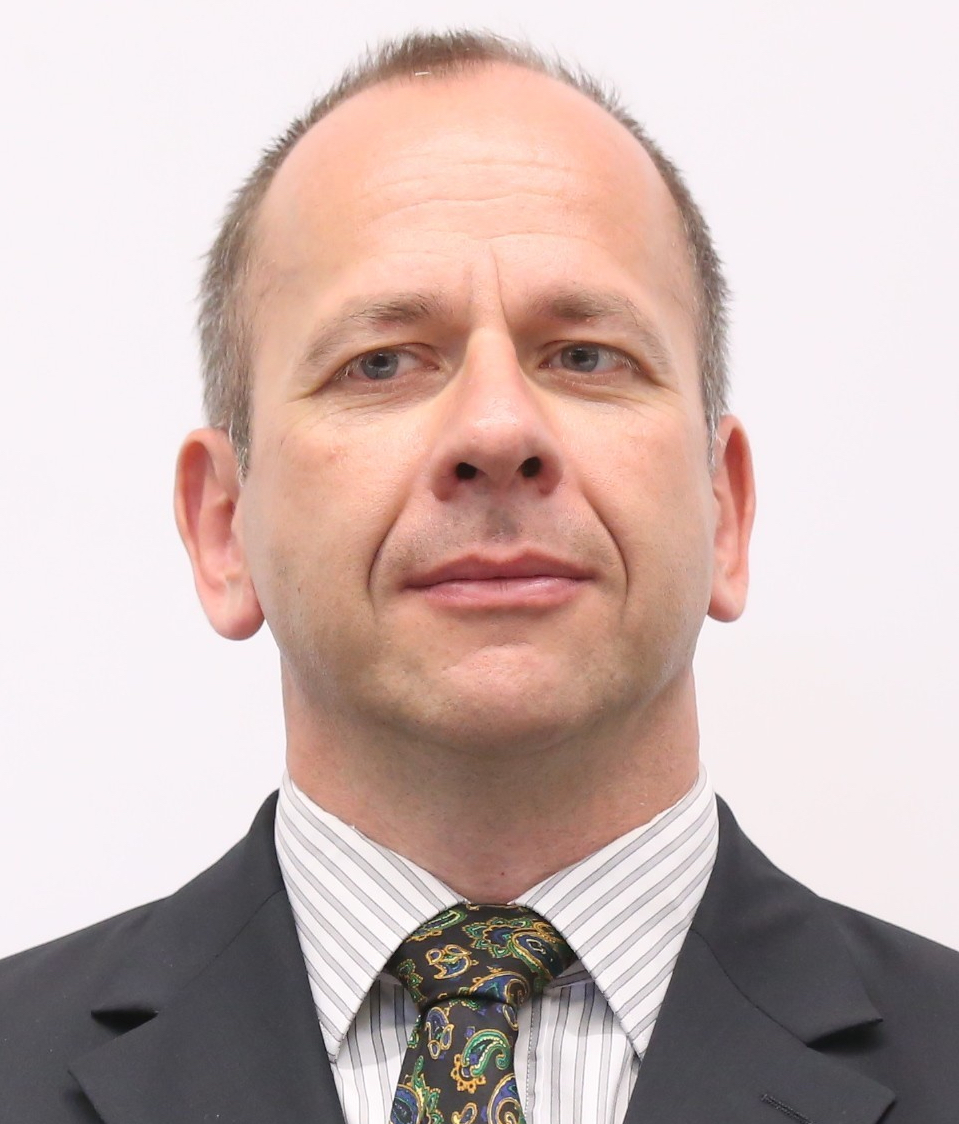
Gábor Sonkoly is Full Professor of History and Geography at the L’École des hautes études en sciences sociales in Paris. He has published 15 books and over 110 articles and book chapters on urban history, urban heritage, and the critical history of cultural heritage. He has presented at over 150 international colloquia and has been a guest professor in 17 countries across five continents. He has been a member of the European Heritage Label Panel since 2017 and has been its chairperson since 2020.
_ _ _
Katarzyna Jagodzińska: I would like to start with your personal story: why did you choose heritage field?
Gábor Sonkoly: I have told this anecdote many times before. It happened in 1998. I was about to finish my PhD in Hungary and France when the first Viktor Orbán government came to power in Hungary. They changed the name of the Ministry of Culture to the Ministry of Cultural Heritage. At the time, this term was not used in Hungary. The term only existed for World Heritage; cultural heritage itself was not part of everyday discussions. It was not a widely used concept. As a historian, I kept asking my friends why we had a ministry for a concept that we did not really understand. Nobody understood.
As a historian finishing my PhD, I had some extra time to conduct additional research. I started researching cultural heritage. I am still doing that, actually.
It goes back to 1998 when I first invited François Hartog, an eminent French historian and classical philologist who wrote a book about regimes of historicity. His point of view was that every society can be understood by how they refer to time. He had this idea of presentism: that pre-modern societies were mostly based on the past, modern societies on the future, but the current society, first called postmodern, has ambiguous relationship both with the past and the present an, thus, it is stuck in the present.
It cannot go back to the past, even if it wants to — to make something ‘great again’, for example. There’s an obsession with going back to the past. We do not know exactly which past. We are also afraid of the future. This is the key experience of current societies: we are stuck in a very fluid and fuzzy concept of time. I think heritage is the best institutional form of identity to reveal this kind of experience.
That’s why heritage is omnipresent. We cannot avoid heritage. Because it is extremely flexible, heritage can essentially cover any political intention. So, from the far right to the far left, everyone is now arguing about heritage. This is not just the case politically, but geographically too. Colonial, postcolonial, Western and non-Western contexts also deal with heritage,
As a historian, I am intrigued by the fact that the concept of history is not enough to describe our identity. Why did we need another one? Why did we need this heritage? I do think that heritage is a rival to history. By ‘history’, I mean a critical approach to the past. Heritage is not so critical. With heritage, there is a lot of room for imagination and biased interpretation of the past by a community. Sometimes this is justified. In a postcolonial context, for example, it is often justified.
However, as I said before, it can also be a dangerous tool in the hands of extremist groups, such as the far right. That’s why I am still studying it. There are many aspects I am interested in.
One more point is that heritage studies are extremely diverse. In short, that’s my story. That’s how I got into it.
Katarzyna Jagodzińska: Going back to the anecdote you mentioned, the inclusion of the word ‘heritage’ in the ministry’s name prompted you to learn more about the concept. Do you think, with hindsight, that it was a good idea to name the ministry after a concept that wasn’t widely understood? Perhaps more people like you were searching for answers to the question, ‘What is heritage?’
Gábor Sonkoly: Of course, historians never judge what is good or bad, do they? So, the question is: what was it used for? I think it could have been beneficial in the Hungarian context to introduce an international or global term because it was not just the word ‘heritage’, but a few years later it became a key pillar for the construction of European identity. However, the way it was used in Hungary was problematic. Currently, there is no Ministry of Culture, Heritage, or even Education.
It was just a passing phase, used to avoid critical approaches to interpreting the past and monument protection. Later, the same regime closed down the monument protection institutes and many experts found themselves out of work. Not just the experts, but their opinions too.
Another revealing fact is that, since 2002, Hungary is the only Central European country with no more World Heritage sites. This sliding towards a fuzzy, politically determined interpretation of the past went hand in hand with the fact that Hungary was cutting itself off from the international discussion about heritage. In this case, heritage was useful for creating a post-communist interpretation of the past, but it quickly became extreme.
One more thing to note is that, as far as I know, Hungary is the only country with a national list of heritage elements and sites that serve nation-building purposes. It is legally established as Hungarikum. These Hungarikums are meant to be elements of Hungarian identity. All of this is part of the heritage discourse.
The funny thing is that these elements are decided by politicians, not scholars. In my opinion, this kind of extreme right heritage discourse is also present in the heritage. Politicians use it to create identity for ideological purposes.
Katarzyna Jagodzińska: Thank you for sharing the story of how you started your professional life in heritage. I would now like to move on to the European Heritage Label, of which you have been a part for many years, heading the panel. This gives you a valuable insight into the nature of the sites submitted for this title. How has the EHL evolved over the years?
Gábor Sonkoly: You know, the European Heritage Label was also a political initiative to create a European identity. It was intended to help people identify with Europe by designating sites as landmarks or reference points. It was a well-meaning approach to identity, but it was unclear how it would evolve. Especially since this is not the only initiative.
There are other programmes like the European capitals of culture (ECOC), the Cultural Routes of the Council of Europe, the Europa Nostra, the European Heritage Alliance and many others.
The legal basis of the European Heritage Label is being under revision, because more than ten years have passed. During this two-year revision process, the results of the EHL Action have been evaluated and the legal basis is re-negotiated among a large number of stakeholders following a participative approach. Hopefully, the renewed process will attract even more candidate sites. I think that the selection is executed in a truly democratic process. I am not just saying this because I have been part of it for ten years by now.
The selection and the assistance of the selected sites have had its challenges. Especially in the first eight or nine years when there was very little dedicated funding. Some sites joined expecting European financial support, but received nothing. They were disappointed by this. In the last few years, however, European decision makers realised that the rightly earned title should receive more support. And that really helps and it is happening now.
I think there are two things: one is qualitative and the other is quantitative. Qualitatively, the sites are learning what it means to be a custodian of European values. EHL is quite a unique initiative simultaneously intriguing all participating stakeholders. It is probably unique in the sense that a whole continent is institutionalising its heritage not by outstanding excellence, but by values bridging different levels of identity building from local to universal. In this sense ‘European significance’ refers to an inclusive approach allowing the shared and critical reflection about values determining current identities.
Consequently, the EHL sites need to learn to distance themselves from national interpretations of importance and create a European one. In the beginning, this was very difficult and often it has taken several attempts to match values and interpretations. By now, many dozens of sites proved to be successful in this.
They give their own understanding of ‘European significance’, which should give a positive message, that is, sharing the same values could create shared heritage communities. Positive, that is, inclusive message as opposed to the habitual nationalist approach, which is exclusive by definition. This transition is not easy. Nevertheless, more and more sites have learnt how to do that.
The other thing is quantitative. We suppose that there will probably be 100 sites by the end of this decade, which leads to the logic of big numbers. It is a significant matter, when 100 heritage sites spread all over the territory of almost all European member states. It is hard to ignore them. Actually, Poland is very active in the EHL Action. Poland and Germany have the most EHL sites. It is great to see more and more Polish sites. All in all, the EHL generates two positive developments. One is the increase in the number of dedicated sites. The other is that these sites really reflect what it means to be not only an important site for their nation, but also for other European countries.
In that sense, Europe does not merely mean a geographical unit. Europe represents a set of values such as pacifism, inclusion, tolerance and ecological awareness. I think it is important that we have sites that promote these values.
Katarzyna Jagodzińska: Could you also comment on any trends in the types of sites being submitted? Because we only see the final selection. We don’t know what the competition is. So perhaps you could comment on that from behind the scenes.
Gábor Sonkoly: Yes, I would say the overall success rate is around 50%, and it is impressively increasing. There are two kinds of nominations. One type is the classic national sites, which have been remodelled to a certain extent.
The others are – often – tiny sites, which I think is a very positive trend. Sites in the countryside with limited human resources, for example. They are not the obvious choices for a European recognition. I think I can speak on behalf of the Panel when I say that we are very moved by this initiative. Even tiny, distant sites can express their belonging to Europe. They are not in the capitals or the centres; they do not possess grand monuments. I think almost 40% of the sites come from really tiny places. I am convinced that it is a very positive trend and it is especially important when you consider the correlation between political preferences and the size of agglomerations in contemporary Europe. It could be decisive that the provincial sites advocate the shared European cause.
Another major trend is the inclusion of ecological sites: sites , regenerated after an ecological disaster, or places, where water management could have been improved through centuries.
More and more educational institutions are also involved. Not just universities, but other institutions too, such as music schools.
Katarzyna Jagodzińska: Do you think something is still missing from the characters of the submitted or selected sites? Do you have any personal choices that could be candidates?
Gábor Sonkoly: It is not missing, but I think there is an ongoing debate about religious sites. Initially, there was the hinted idea that Europe should be understood as secular. However, it is totally against the foundation and even the symbolism of Europe. I think it is a positive trend that religious sites are now also expressing their European identity. Heritage offers an opportunity to go beyond ideological divisions between atheist/religious or secular/non-secular, etc. It is refreshing to see how religious sites, such as monasteries or abbeys, redefining themselves. Even after their functional change, they present themselves as living institutions. Although there are still few of such sites, their number is definitely increasing.
For us, it is regrettable that not all EU members have ratified the legal base and some countries have not nominated sites yet. I am quite optimistic that within a few years, every EU member, and hopefully even other countries, will join the EHL.
At the moment, the legal basis does not allow it, but it would be preferable in the future to include non-EU countries in the EHL Action. I suppose that we should broaden our definition of ‘European’ towards partner countries and even beyond. Other countries, such as Ukraine, should definitely have the option of joining the EHL. In 2022, when I was lecturing in Japan about the EHL, one of the participants proposed a Japanese site for the European Heritage Label after my lecture. It proved me that there are shared values which are global.
If Europe is to take the lead globally in this inclusion and demonstrate how heritage can be used to promote democracy and combat social inequalities, I believe we should embrace that wholeheartedly. These are the main ideas I wanted to share.
Katarzyna Jagodzińska: References and comparisons between the European Heritage Label and the World Heritage List appear quite often and are quite understandable. What synergies and relationships has the EHL established with UNESCO?
Gábor Sonkoly: Of course, UNESCO has an office in Brussels. So, when the EHL or any other European heritage initiative holds conferences or events, UNESCO is always invited. There is a continuous exchange between EU institutions and UNECO in heritage matters.
Many of our panel experts used to work for UNESCO. Nevertheless, even though both world heritage and EHL are establishing a ‘list’ of ‘sites’, there are rather few shared characteristics between the two initiates. The EHL ‘s approach to heritage is fresh: it is project-based; it is very dynamic; it is not based on outstanding universal value; and it does not apply strict categories: there is no distinction between natural, cultural, mixed or even tangible and intangible heritage sites.
Of course, that’s my approach. However, I think the EHL comes from a different period and heritage regime. There are some EHL sites which are also World Heritage sites. It os interesting to see how a given site can have two valuable and legitimate interpretations. I think they complement each other very well. First, we had some discussions about whether we could accept sites that were already on the World Heritage list. We finally agreed that it is not a problem. If they had the intention and the capacity to reinterpret themselves and to understand the EHL criteria, why not? That is actually an asset.
I mean, that is one of the positive things about heritage; it is not exclusive. As I said at the beginning, heritage is flexible. The same site can express both its global importance and the European values that we stand for. Thus, I think we should have a constructive relationship with UNESCO. Because UNESCO and the World Heritage Office are evolving and, in consequence, there concept of heritage is also developing.
One more thing: the World Heritage List has often been criticised for being Eurocentric. I do not think that’s the case anymore. If you look at the current most active ‘players’ (nation states) in the World Heritage arena, you will see that they are mainly non-European and they contribute to a renewed definition and practice of cultural heritage.
I also think that the EHL has done a lot to combat Eurocentrism. It is my personal opinion, but we might say that we have entered a post-postcolonial world. Postcolonial studies have been crucial in addressing ways of how European colonizers has imposed themselves on other parts of the world. In the meantime, Europe is no longer the centre of the world. Not just economically, but also in terms of cultural productions and norm-setting. In the selection of the EHL sites, for example, a critical approach to the past, including colonial role and atrocities, is taken into consideration and the interpretation of ‘European significance’ is not meant to express any kind of superiority. Just the opposite, Europe is conceived in dialogue, participation and equality.
Katarzyna Jagodzińska: You were commenting on the EHL and the World Heritage List, but you also mentioned many other initiatives, cultural roots and cities, as well as Europa Nostra. I wanted to ask for your personal opinion and general view on the progress of heritage and the heritage of Europe, with reference to a variety of listing programmes. Do we really need that many? Do we need them at all?
Gábor Sonkoly: I am convinced that we definitely need them. Why are there so many and diverse initiatives? Because at different stages in the process of European integration, decision makers realised that economic and financial unity alone are not sufficient to create identity and belonging. Even with shared currency and in a borderless continent, people do not necessarily build a common identity. For a shared European identity, we need more: we also need a shared culture with shared cultural references. I think these initiatives are definitely useful and justified. It is a good question though whether we need so many of them, because their number is still growing. Maybe concentrating on a few would be more beneficial.
My personal opinion is that probably not all of them will survive. I think only time will tell. That’s why I’m happy about the EHL: when it reaches 100 in the near future, it would be difficult to halt.
The same applies to Europa Nostra. Europa Nostra has a long history and many award-winning places, which is very good. All those communities that have been awarded or involved identify with this initiative. They are part of a network. Culture has always evolved in networks. So, it is essential to have many such networks. I think we should let time decide whether these networks can really survive. If some cannot survive, they should join the more successful ones. I see all these initiatives as complementary. However, they should be more bottom-up.
It is important that they come from local communities, which is partially the case for EHL. Although the initiative officially starts from the Decision of the European Parliament in 2011, the proposal should be prepared by the sites.
For me, the current number of sites is a success. Although, there several dozens of sites, this number will hopefully grow. It is similar to that of the beginning of the World heritage. When UNESCO was created after WWII, nobody would have imagined that cultural heritage would become its most renowned activity. First, as its names although suggests, it was about science, culture and education. There was not much reference to heritage. By now, UNESCO is usually associated with the World heritage, which came decades after its establishment. We might see a similar evolution with all the European heritage initiatives, since they have a great potential to carry European identity for a large part of the European population.
Let’s see. I reckon these initiatives should cooperate, because they have various vocations and they complete each other. Moreover, they together they can reach out for more people, which is a mutual benefit. Their diversity also demonstrates that of contemporary cultural heritage. Heritage encompasses tourism, monument protection and nature preservation, among many other things. Consequently, we probably need different areas of expertise for their recognition.
Katarzyna Jagodzińska: But is it possible that the large number of inscriptions, which we know will continue to grow, will cause them to lose value? The more there are, the less important they might become because there would be so many.
Gábor Sonkoly: I do not think that it is what happened with world heritage sites, did it? I mean, when they first came up with the idea of world heritage, they were thinking of an ‘elite club’ as the seven wonders of the world. Now there are 1,200+ sites, which is not so exclusive, but it still bestows approval and fame on the involved sites. The world heritage is still an honourable and attractive institution. Probably, the same applies to the EHL and other initiatives.
At the same time, it is important to provide sufficient financial support for the sites. Heritagisation always starts with a real or apprehended threat. That’s why the recognition of a site should always be followed by a form of care and preservation. EHL is a form of award, which should be associated with a prize that could help the sites to develop and to spread their message.
It is a bit like the Olympic Games: there are the top performing countries with a great number of medals, but then there are many other countries with not so spectacular achievements, whose citizen are also very much excited about the competitions.
Katarzyna Jagodzińska: Yes. Although it’s also becoming a business.
Gábor Sonkoly: Heritage is also a form of business. It cannot be avoided. Heritage is used for financial and economic purposes, such as tourism or cultural industries. Of course, that’s not a bad thing. For a long time, I also thought that this exploitation of heritage was a kind of corruption and an unhealthy compromise with its authenticity. In the meanwhile, the heritage field has expanded so impressively that it currently embraces cultural industries and very much interwoven with local and even global economies. Visiting a site is an act of tourism, but also that of learning and personal development. An attractive site transmitting and explaining values of inclusion and participation can simultaneously boost the local economy and inspire its visitors.
Katarzyna Jagodzińska: So, to conclude the discussion, I would like to ask, from your perspective, what are the most pressing issues regarding heritage from a global or European perspective?
Gábor Sonkoly: I think the most pressing issue is in the political arena. As I mentioned before, heritage has become a key reference for every ideology in this arena. I think it is essential not to allow heritage to be used by extremist actors to promote false, anachronistic and biased ideas about the past without a critical approach or to designate an imaginary period in the past that we should go back to.
Because if we go back to any of such periods, there would generate a revival exclusion according artificially designs categories of race, gender, etc. The fear of the unknown future should not be retorted by nurturing a nostalgic desire for an imagined past. Nostalgia is more a medical condition than not a solid political stand.
It is more rewarding to use the process of heritagisation for democratisation, participatory approaches, and to protect nature and the environment. Because heritage also has this potential.
I think heritage is a foster child of modernisation. As soon as modernisation began, nostalgia for the lost world emerged. It is a legitimate experience to feel nostalgic for the past. But the more distant the past becomes, the more nostalgic one can become about it. And there lay the danger. This relationship becomes sentimental, emotionally driven. I think that the political use of heritage should include a critical and analytical approach and not to trigger sentiments of bitter loss. There are plenty of good practices in European history, which could be used as examples, such as centuries-long irrigation systems based on cooperation between communities and agglomerations, the pre-industrial respect of nature, etc., etc.
I think we should use heritage to shine a light on this knowledge. It does not mean that we should forget political and social injustices that occurred during those centuries. So, heritagisation should be a matter for critical thinking and democratic forces. As the EHL proposal very often prove.
Katarzyna Jagodzińska: Could you tell us what you are currently working on? What can we expect?
Gábor Sonkoly: My primarily professional identity is that I am an urban historian. In the last three decades, I have been involved in heritage studies, but never left the field of urban history. Thus, my main research interest has always been urban heritage. In the last fifteen years, I try to understand how the expanding field of cultural heritage redefines urban territories of protection. In 2016, I wrote a book about historic urban landscape, but I do. not think that topic, the comprehension of heritage landscape in urban settings, has been fully deployed for research. Moreover, the great variety of intangible urban heritage – for example food-related heritage practices – reveals new fields of research for the territorialisation of urban heritage. Similarly, the integration of rust-belts as zones of industrial heritage or the decay of the division of protected ‘historic cities’ and non-classified modern quarters also lead to new heritage networks and territorial reorganisations in cities.
Currently, I am interested in how the historic urban landscape approach, or simply the potentials of urban landscape, is used to unite and redefine cities. I am particularly intrigued by those non-European examples, which manifest new approaches to urban heritage, which are not based on nature/culture or tangible/intangible divide. I am currently studying the latest World Heritage City nominations, roughly those since 2010, to examine new forms of the territorial definition of preserved (and nominated) urban areas. I could have identified a few countries that are very keen on novelties in urban heritage, such as Brazil and India. I met excellent researchers and experts from these countries; I am learning a lot from them and we are establishing exciting methodologies of comparative urban heritage studies. This is my new project: new global tendencies in urban heritage protection.
Katarzyna Jagodzińska: I’ll keep my fingers crossed for a quick book at the end of the research. Thank you very much for the interview.
Gábor Sonkoly: Thank you.
Teams, 12 September 2025